... newer stories
Mittwoch, 8. Dezember 2010
The Banshee
anaconda178, 13:34h
Banshee or 'Bean-sidhe' is Irish for faerie woman - ban (bean), meaning a woman, and shee ( sidhe), meaning faerie. The banshee can appear in one of three guises: a young woman, a stately matron or a raddled old hag. These represent the triple aspects of the Celtic goddess of war and death, namely Badhbh, Macha and Mor-Rioghain.
She usually wears either a grey, hooded cloak or the winding sheet or grave robe of the unshriven dead. She may also appear as a washer-woman, and is seen apparently washing the blood stained clothes of those who are about to die. In this guise she is known as the bean-nighe or washing woman. She always has long flowing hair and eyes red from crying.
When someone is about to die, the Banshee appears at the family's home during the night and weeps and wails. Sometimes, the Banshee cries for several nights in a row. Her sharp, cries and wails are also called 'keen'. The wail of a banshee pierces the night, it's notes rising and falling like the waves of the sea, it always announces a mortal's death.
She is solitary woman fairy, mourning and forewarning those only of the best families in Ireland, those with most ancient Celtic lineages, whose names begin with 'Mac/Mc' or 'O'. According to tradition, the banshee can only cry for five major Irish families: the O'Neills, the O'Briens, the O'Connors, the O'Gradys and the Kavanaghs. Intermarriage has since extended this select list.
Each Banshee has her own mortal family and out of love she follows the old race across the ocean to distant lands. Her wails or keen can be heard in America and England, wherever the true Irish have settled.
When a member of the beloved race is dying, she paces the dark hills about his house. She sharply contrasts against the night's blackness, her white figure emerges with silver-grey hair streaming to the ground and a grey-white cloak of a cobweb texture clinging to her tall thin body. Her face is pale, her eyes red with centuries of crying.
She is also know as White Lady of Sorrow and Lady of Death. Unseen, banshees attend the funerals of the beloved dead. Although, sometimes she can be heard wailing, her voice blending in with the mournful cries of others.
She usually wears either a grey, hooded cloak or the winding sheet or grave robe of the unshriven dead. She may also appear as a washer-woman, and is seen apparently washing the blood stained clothes of those who are about to die. In this guise she is known as the bean-nighe or washing woman. She always has long flowing hair and eyes red from crying.
When someone is about to die, the Banshee appears at the family's home during the night and weeps and wails. Sometimes, the Banshee cries for several nights in a row. Her sharp, cries and wails are also called 'keen'. The wail of a banshee pierces the night, it's notes rising and falling like the waves of the sea, it always announces a mortal's death.
She is solitary woman fairy, mourning and forewarning those only of the best families in Ireland, those with most ancient Celtic lineages, whose names begin with 'Mac/Mc' or 'O'. According to tradition, the banshee can only cry for five major Irish families: the O'Neills, the O'Briens, the O'Connors, the O'Gradys and the Kavanaghs. Intermarriage has since extended this select list.
Each Banshee has her own mortal family and out of love she follows the old race across the ocean to distant lands. Her wails or keen can be heard in America and England, wherever the true Irish have settled.
When a member of the beloved race is dying, she paces the dark hills about his house. She sharply contrasts against the night's blackness, her white figure emerges with silver-grey hair streaming to the ground and a grey-white cloak of a cobweb texture clinging to her tall thin body. Her face is pale, her eyes red with centuries of crying.
She is also know as White Lady of Sorrow and Lady of Death. Unseen, banshees attend the funerals of the beloved dead. Although, sometimes she can be heard wailing, her voice blending in with the mournful cries of others.
... link (0 Kommentare) ... comment
The Shamrock
anaconda178, 13:33h
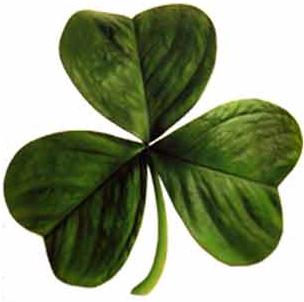
The trefoil or Shamrock, at one time called the "Seamroy", symbolises the cross and blessed trinity. Before the Christian era it was a sacred plant of the Druids of Ireland because its leaves formed a triad.
The well known legend of the Shamrock connects it definitely to St. Patrick and his teaching.
Preaching in the open air on the doctrine of the trinity, he is said to have illustrated the existence of the Three in One by plucking a shamrock from the grass growing at his feet and showing it to his congregation. The legend of the shamrock is also connected with that of the banishment of the serpent tribe from Ireland by a tradition that snakes are never seen on trefoil and that it is a remedy against the stings of snakes and scorpions.
The trefoil in Arabia is called shamrakh and was sacred in Iran as an emblem of the Persian triads. The trefoil, as noted above, being a sacred plant among the Druids, and three being a mystical number in the Celtic religion as well as all others, it is probable that St. Patrick must have been aware of the significance of his illustration.
... link (0 Kommentare) ... comment
The Giant Rat
anaconda178, 13:33h
A needy man in Galway had a wife and four children. One morning, they gazed upon the largest rat that had ever set foot in their kitchen, as they sat down for breakfast. The rat jumped up on to the kitchen table, and ate all the food that had been prepared for breakfast. The family looked on in amazement and as well as being scared out of their wits!
No sooner had the rat come in and eaten all the food, did it leave. However, when the man returned home from a hard day's work for his dinner, the rat also followed him in to the house. A repetition of the breakfast fiasco took place, and the rats stomach was of course full.
"God help us!" "We shall starve to death" shouted the man in his loudest voice.
The following day, the by now hungry man, bought a cat that was known to be a good rat catcher. As usual the rat returned to see the cat sitting by the fire. What ensued was a monumental fight and the cat just managed to survive with her life intact! Again, the rat climbed up on to the table and ate all the food, and as usual left after it's stomach was full.
The sorry cat licked her wounds, drank some milk, and went out, When the man returned home from work the following night, the cat had still not returned. "We're finished now," he said. "That thieving rat will kill us for sure!"
Yet again the rat came to supper, munched the food and left. These events continued for three days and three nights, but the cat had still not surfaced. On the fourth morning the cat returned, and in tow was the biggest cat that any of the family had ever seen!
The small cat sat on a chair, while the big cat sat by the hearth. Both cats were given milk to drink as a token gesture.
The cats drank their milk and the man sat down to eat his breakfast. The rat arrived, but paused when it saw the big cat. They both launched themselves at each other in the centre of the room. They fought in every nook and cranny in the house, all day long. At sunset, the huge cat finally managed to the kill the equally huge rat.
Both cats had some more milk for their efforts in ridding the family of the rat, and left the house
~ and they were never seen again.
No sooner had the rat come in and eaten all the food, did it leave. However, when the man returned home from a hard day's work for his dinner, the rat also followed him in to the house. A repetition of the breakfast fiasco took place, and the rats stomach was of course full.
"God help us!" "We shall starve to death" shouted the man in his loudest voice.
The following day, the by now hungry man, bought a cat that was known to be a good rat catcher. As usual the rat returned to see the cat sitting by the fire. What ensued was a monumental fight and the cat just managed to survive with her life intact! Again, the rat climbed up on to the table and ate all the food, and as usual left after it's stomach was full.
The sorry cat licked her wounds, drank some milk, and went out, When the man returned home from work the following night, the cat had still not returned. "We're finished now," he said. "That thieving rat will kill us for sure!"
Yet again the rat came to supper, munched the food and left. These events continued for three days and three nights, but the cat had still not surfaced. On the fourth morning the cat returned, and in tow was the biggest cat that any of the family had ever seen!
The small cat sat on a chair, while the big cat sat by the hearth. Both cats were given milk to drink as a token gesture.
The cats drank their milk and the man sat down to eat his breakfast. The rat arrived, but paused when it saw the big cat. They both launched themselves at each other in the centre of the room. They fought in every nook and cranny in the house, all day long. At sunset, the huge cat finally managed to the kill the equally huge rat.
Both cats had some more milk for their efforts in ridding the family of the rat, and left the house
~ and they were never seen again.
... link (0 Kommentare) ... comment
Children of Lir
anaconda178, 13:32h
Long ago there was a king in Ireland called Lir who was the father of four beautiful children, a son, a daughter and twin sons. Their mother (daughter of the High King of Ireland) died when they were still young and needing loving care. And so it came about that King Lir, who dearly loved his four children and wanted them to have a new mother, married his wife's sister, Aoife, and gave them into her charge.
But Aoife, seeing King Lir playing with the chidren and giving them so much of his time, became jealous of them and thought how she might have her King all to herself and the children out of the way. One night she secretly bargained with a druid for the use of his magic wand and made her plans while the children were asleep.
Next morning,when they woke to a beautiful summer's day, Aoife had perfected her plan. "Come with me," she said to the children, "Today I am going to take you to the lake and when the sun gets hot you can all go into the cool water for a swim." When noonday came and the sun was at it's height in the sky Aoife saw a dark cloud coming from the North and, fearing her plan would be spoiled, shouted "Quickly now, into the water with you all!" Then using the druid's magic wand Aoife cast a spell on the four children, turning them one by one into swans. The great dark cloud from the North turned black, shut out the sun, burst into thunder and with a scream Aoife disappeared into the cloud and was never seen again. But Aoife, with her druid's wand, had not taken away the children's human voices; she had told them they would be set free again from the spell in 900 years time when St. Patrick would come to Ireland and they would hear the sound of the first Christian bells.
And so at the end of 300 years on lake Davra, 300 years on the sea of Moyle and another 300 years on the lake isle of Glora in Mayo, the day came when they heard the distant sound of one of the first Christian bells to ring in Ireland. They immediately followed the sound until they came to the house of a Christian called Caomhog and told him what had happened to them so long ago.
They were lovingly cared for by the people of the house and people came from far and near to see the swans who could talk and sing. Then one day a princess sent her servants to try and steal the swans. But just as the servants laid hands on them the time had come for the swans to become humans again and the servants ran away terrified.
Now that the swans were again human, although 900 years old, Caomhog had them baptised and the bells rang out at their Christening. Soon afterwards, when they had died of old age, Caomhog dreamt on the very same night that he saw four beautiful children - a boy, his sister and two twin brothers flying out over the lake then straight up to heaven and he knew they really were the children of Lir.
But Aoife, seeing King Lir playing with the chidren and giving them so much of his time, became jealous of them and thought how she might have her King all to herself and the children out of the way. One night she secretly bargained with a druid for the use of his magic wand and made her plans while the children were asleep.
Next morning,when they woke to a beautiful summer's day, Aoife had perfected her plan. "Come with me," she said to the children, "Today I am going to take you to the lake and when the sun gets hot you can all go into the cool water for a swim." When noonday came and the sun was at it's height in the sky Aoife saw a dark cloud coming from the North and, fearing her plan would be spoiled, shouted "Quickly now, into the water with you all!" Then using the druid's magic wand Aoife cast a spell on the four children, turning them one by one into swans. The great dark cloud from the North turned black, shut out the sun, burst into thunder and with a scream Aoife disappeared into the cloud and was never seen again. But Aoife, with her druid's wand, had not taken away the children's human voices; she had told them they would be set free again from the spell in 900 years time when St. Patrick would come to Ireland and they would hear the sound of the first Christian bells.
And so at the end of 300 years on lake Davra, 300 years on the sea of Moyle and another 300 years on the lake isle of Glora in Mayo, the day came when they heard the distant sound of one of the first Christian bells to ring in Ireland. They immediately followed the sound until they came to the house of a Christian called Caomhog and told him what had happened to them so long ago.
They were lovingly cared for by the people of the house and people came from far and near to see the swans who could talk and sing. Then one day a princess sent her servants to try and steal the swans. But just as the servants laid hands on them the time had come for the swans to become humans again and the servants ran away terrified.
Now that the swans were again human, although 900 years old, Caomhog had them baptised and the bells rang out at their Christening. Soon afterwards, when they had died of old age, Caomhog dreamt on the very same night that he saw four beautiful children - a boy, his sister and two twin brothers flying out over the lake then straight up to heaven and he knew they really were the children of Lir.
... link (0 Kommentare) ... comment
The Faerie King
anaconda178, 13:30h
The great Faerie king of Co. Galway in the west of Ireland is Finnbheara (Finnvarr). Cnoc Meadha is his abode, a prominent hill west of Tuam, on top of which is a burial mound. To the north west is Magh Tuireadh, where the legendary battle between the Fir Bolgs and the Tuatha De Danaans took place.
There are many stories which illustrate Finnbheara's liking for earthly women. He would often draw young girls away to dance all night with him in his palace, but the next morning they were always found safely asleep in bed. One particular nobleman was not so fortunate, however. His bride was taken one time by the Faerie king. The bride's old nurse told the noble that he must dig down into the sidhe mound, starting at the top. But during the night the fairies of the mound filled the tunnel back in with earth. This happened again on the second night. In despair the nobleman turned to the old nurse again, who told him to sprinkle the earth with salt and place a line of burning turf around the trench, as the sidhe could not resist that. The following morning the bride was found safe in her bed.
Finnbheara is also known to love horses, and he is usually seen riding a black horse with flaring red nostrils.
Donn of Knockfierna
In Co. Limerick the Faerie king Donn of Knockfierna is well remembered. There is a large earthern fort on his hill and a number of dolmens known as the 'Giants Graves'. You can see the entrance to his Faerie palace. Donn is the ancient Celtic god of the Dead who rules the rocky islands to the south west on the Atlantic coast. Donn is also known in Co. Fermanagh as the ancestor of the Maguires, whom he helped in their battles. Sometimes he is seen riding on a white horse on stormy nights, when people would exclaim: "Donn is galloping in the clouds tonight". Donn now more closely resembles a medieval Irish landlord than a god. He rules quite strictly but will aid his people when needed. He is also believed to fight against rival hosts in other counties, the winner carrying off the best potato crop for that year.
It will be noted that the Faerie queens and kings are in fact the old pagan gods and goddesses 'in disguise' who have long been revered by the Irish. It has been said that the Celtic gods of Ireland had long been wiped out, buried under the sway of Catholicism. Yet anyone who has been to Ireland, or listened to her many folk tales can see for themselves that this is very far from the reality. The old gods live on in folk tales as the giants of the hill; the Gobhan
Saor who built all the bridges of Ireland; the Gille Decair, a clown and trickster; the carl (serf) of the drab coat and many others. The old deities were once worshipped throughout Ireland, however it is in the west that they are best remembered now, the east having been more Christianized and anglicised, and subject to more invasions. By contrast, the west of Ireland, to which the native Irish were driven ("to hell or Connaught") has held on longer to her ancient heritage.
There are many stories which illustrate Finnbheara's liking for earthly women. He would often draw young girls away to dance all night with him in his palace, but the next morning they were always found safely asleep in bed. One particular nobleman was not so fortunate, however. His bride was taken one time by the Faerie king. The bride's old nurse told the noble that he must dig down into the sidhe mound, starting at the top. But during the night the fairies of the mound filled the tunnel back in with earth. This happened again on the second night. In despair the nobleman turned to the old nurse again, who told him to sprinkle the earth with salt and place a line of burning turf around the trench, as the sidhe could not resist that. The following morning the bride was found safe in her bed.
Finnbheara is also known to love horses, and he is usually seen riding a black horse with flaring red nostrils.
Donn of Knockfierna
In Co. Limerick the Faerie king Donn of Knockfierna is well remembered. There is a large earthern fort on his hill and a number of dolmens known as the 'Giants Graves'. You can see the entrance to his Faerie palace. Donn is the ancient Celtic god of the Dead who rules the rocky islands to the south west on the Atlantic coast. Donn is also known in Co. Fermanagh as the ancestor of the Maguires, whom he helped in their battles. Sometimes he is seen riding on a white horse on stormy nights, when people would exclaim: "Donn is galloping in the clouds tonight". Donn now more closely resembles a medieval Irish landlord than a god. He rules quite strictly but will aid his people when needed. He is also believed to fight against rival hosts in other counties, the winner carrying off the best potato crop for that year.
It will be noted that the Faerie queens and kings are in fact the old pagan gods and goddesses 'in disguise' who have long been revered by the Irish. It has been said that the Celtic gods of Ireland had long been wiped out, buried under the sway of Catholicism. Yet anyone who has been to Ireland, or listened to her many folk tales can see for themselves that this is very far from the reality. The old gods live on in folk tales as the giants of the hill; the Gobhan
Saor who built all the bridges of Ireland; the Gille Decair, a clown and trickster; the carl (serf) of the drab coat and many others. The old deities were once worshipped throughout Ireland, however it is in the west that they are best remembered now, the east having been more Christianized and anglicised, and subject to more invasions. By contrast, the west of Ireland, to which the native Irish were driven ("to hell or Connaught") has held on longer to her ancient heritage.
... link (0 Kommentare) ... comment
Dagda's Harp
anaconda178, 13:29h
It is said that there were two quite different kinds of people in Ireland: one set of people with long dark hair and dark eyes, called Fomorians -- they carried long slender spears made of golden bronze when they fought -- and another race of people who were golden-haired and blue-eyed, and who carried short, blunt, heavy spears of dull metal.
The golden-haired people had a great chieftain who was also a kind of high priest, who was called the Dagda. And this Dagda had a wonderful magic harp. The harp was beautiful to look upon, mighty in size, made of rare wood, and ornamented with gold and jewels; and it had wonderful music in its strings, which only the Dagda could call out. When the men were going out to battle, the Dagda would set up his magic harp and sweep his hand across the strings, and a war song would ring out which would make every warrior buckle on his armor, brace his knees, and shout, ``Forth to the fight!'' Then, when the men came back from the battle, weary and wounded, the Dagda would take his harp and strike a few chords, and as the magic music stole out upon the air, every man forgot his weariness and the smart of his wounds, and thought of the honor he had won, and of the comrade who had died beside him, and of the safety of his wife and children. Then the song would swell out louder, and every warrior would remember only the glory he had helped win for the king; and each man would rise at the great tables his cup in his hand, and shout ``Long live the King!''
There came a time when the Fomorians and the golden-haired men were at war; and in the midst of a great battle, while the Dagda's hall was not so well guarded as usual, some of the chieftains of the Fomorians stole the great harp from the wall, where it hung, and fled away with it. Their wives and children and some few of their soldiers went with them, and they fled fast and far through the night, until they were a long way from the battlefield. Then they thought they were safe, and they turned aside into a vacant castle, by the road, and sat down to a banquet, hanging the stolen harp on the wall.
The Dagda, with two or three of his warriors, had followed hard on their track. And while they were in the midst of theirbanqueting, the door was suddenly burst open, and the Dagda stood there, with his men. Some of the Fomorians sprang to their feet, but before any of them could grasp a weapon, the Dagda called out to his harp on the wall, ``Come to me, O my harp!''
The great harp recognized its master's voice, and leaped from the wall. Whirling through the hall, sweeping aside and killing the men who got in its way, it sprang to its master's hand. And the Dagda took his harp and swept his hand across the strings in three great, solemn chords. The harp answered with the magic Music of Tears. As the wailing harmony smote upon the air, the women of the Fomorians bowed their heads and wept bitterly, the strong men turned their faces aside, and the little children sobbed.
Again the Dagda touched the strings, and this time the magic Music of Mirth leaped from the harp. And when they heard that Music of Mirth, the young warriors of the Fomorians began to laugh; they laughed till the cups fell from their grasp, and the spears dropped from their hands, while the wine flowed from the broken bowls; they laughed until their limbs were helpless with excess of glee.
Once more the Dagda touched his harp, but very, very softly. And now a music stole forth as soft as dreams, and as sweet as joy: it was the magic Music of Sleep.
When they heard that, gently, gently, the Fomorian women bowed their heads in slumber; the little children crept to their mothers' laps; the old men nodded; and the young warriors drooped in their seats and closed their eyes: one after another all the Fomorians sank into sleep.
When they were all deep in slumber, the Dagda took his magic harp, and he and his golden-haired warriors stole softly away, and came in safety to their own homes again.
The golden-haired people had a great chieftain who was also a kind of high priest, who was called the Dagda. And this Dagda had a wonderful magic harp. The harp was beautiful to look upon, mighty in size, made of rare wood, and ornamented with gold and jewels; and it had wonderful music in its strings, which only the Dagda could call out. When the men were going out to battle, the Dagda would set up his magic harp and sweep his hand across the strings, and a war song would ring out which would make every warrior buckle on his armor, brace his knees, and shout, ``Forth to the fight!'' Then, when the men came back from the battle, weary and wounded, the Dagda would take his harp and strike a few chords, and as the magic music stole out upon the air, every man forgot his weariness and the smart of his wounds, and thought of the honor he had won, and of the comrade who had died beside him, and of the safety of his wife and children. Then the song would swell out louder, and every warrior would remember only the glory he had helped win for the king; and each man would rise at the great tables his cup in his hand, and shout ``Long live the King!''
There came a time when the Fomorians and the golden-haired men were at war; and in the midst of a great battle, while the Dagda's hall was not so well guarded as usual, some of the chieftains of the Fomorians stole the great harp from the wall, where it hung, and fled away with it. Their wives and children and some few of their soldiers went with them, and they fled fast and far through the night, until they were a long way from the battlefield. Then they thought they were safe, and they turned aside into a vacant castle, by the road, and sat down to a banquet, hanging the stolen harp on the wall.
The Dagda, with two or three of his warriors, had followed hard on their track. And while they were in the midst of theirbanqueting, the door was suddenly burst open, and the Dagda stood there, with his men. Some of the Fomorians sprang to their feet, but before any of them could grasp a weapon, the Dagda called out to his harp on the wall, ``Come to me, O my harp!''
The great harp recognized its master's voice, and leaped from the wall. Whirling through the hall, sweeping aside and killing the men who got in its way, it sprang to its master's hand. And the Dagda took his harp and swept his hand across the strings in three great, solemn chords. The harp answered with the magic Music of Tears. As the wailing harmony smote upon the air, the women of the Fomorians bowed their heads and wept bitterly, the strong men turned their faces aside, and the little children sobbed.
Again the Dagda touched the strings, and this time the magic Music of Mirth leaped from the harp. And when they heard that Music of Mirth, the young warriors of the Fomorians began to laugh; they laughed till the cups fell from their grasp, and the spears dropped from their hands, while the wine flowed from the broken bowls; they laughed until their limbs were helpless with excess of glee.
Once more the Dagda touched his harp, but very, very softly. And now a music stole forth as soft as dreams, and as sweet as joy: it was the magic Music of Sleep.
When they heard that, gently, gently, the Fomorian women bowed their heads in slumber; the little children crept to their mothers' laps; the old men nodded; and the young warriors drooped in their seats and closed their eyes: one after another all the Fomorians sank into sleep.
When they were all deep in slumber, the Dagda took his magic harp, and he and his golden-haired warriors stole softly away, and came in safety to their own homes again.
... link (0 Kommentare) ... comment
Irish Mythology
anaconda178, 13:28h
The Irish mythological cycle can be divided into four major divisions. The first is the historical-mythological cycle. Two important texts are part of this cycle: the Leabhar Gahbala (Book of Invasions), a mythological history of Ireland; and the Dinnshenchas (History of Places), a mythological geography of Ireland. The main theme in the historical-mythological cycle concerns the peopling of Ireland and the fortunes of the Tuatha De Danann (People of the Goddess Danann), who were the mythological ancestors of the Irish.
In the historical-mythological cycle the story of the predecessors of the Irish settlement is told. The first group to come to Ireland is led by a woman, Cesair; the majority of her group is composed of women. This group arrives before the great flood, and all are destroyed in the flood except one, Fintan, who in the form of a salmon, eagle, or hawk witnesses all of the later settlements. Fintan is the patron of the traditional lore and storytelling. The next group is led by Partholan, but he and all of his people die in a plague. A third group is led by Nemed; after suffering many vicissitudes, this group divides into three parts and abandons Ireland. Two of these groups, the Fir Bolg (Bolg Men) and the Tuatha De Danann (People of the Goddess Danann), occupy the subsequent history. The Fir Bolg return to Ireland, which they divide into the five provinces of Ulster, Leinster, Munster, Connacht, and Meath; they also introduce kingship. When the Tuatha De Danann arrive, warfare ensues over possession of the land. One tradition states that after the First Battle of Mag Tuired, the Fir Bolg and Tuatha De Danann make peace and agree to live together in harmony.
The Tuatha are described as demigods; they are beautiful people, possessed with skill in music and the arts. They are always spoken about within a context of fabulous magical powers and wonders, which define the essence of their manifestation. A central theme in the myth of the Tuatha is that of the Second Battle of Mag Tuired. During the First Battle of Mag Tuired the king of the Tuatha, Nuada, is wounded. Because he is now physically blemished, he can no longer serve as king. The kingship is then given to his adopted son, Bres. Bres's father is a king of the Fomoire, a group of people with whom Nemed and his people had fought in previous times. Bres's mother, Eriu, is, however, a Tuatha. The choice of Bres is apparently an attempt to accomplish an alliance between the Tuatha and the Fomoire.
Bres, however, demands severe tribute from the Tuatha and persecutes them in many ways. A champion, Lug, arises from among the Tuatha; Lug is a master of all the arts of magic and warfare. Meanwhile Nuada, the blemished king, is restored to his kingship after he has been equipped with a silver arm. Nuada takes counsel with Lug, Dagda, the great god with the magic cauldron, and others concerning the preparations for warfare with the Fomoire. When the battle finally takes place, the Tuatha who are slain in the fighting are magically restored to life. Lug also uses magic to vanquish Balar "of the baleful eye." The Fomoire are routed. The life of the captured Bres is spared when he promises to advise on the proper times for sowing and reaping. Unlike similar battles in other Indo-European mythologies, the Second Battle of Mag Tuired does not end in a reconciliation and fusion of the two parties. The skills imparted by Bres, however, serve the same function of completing the functions needed in settled society.
The Tuatha are themselves later defeated by the Sons of Mil, the immediate ancestors of the Irish people. The Tuatha are said now to live in the underground of Ireland, in the fairy regions, where the fairies are subject to them.
The second division is the Ulster cycle. These myths are stories of the warriors of King Conchobar. The themes of those of honor and prestige revolve around heroic deeds and the hero Cu Chulainn (or Cuchulainn).
In the Ulster cycle the heroic accomplishments of Cuchulain are related. Cuchulain in some versions is said to be a foster child of Ulster, and in some respects his character is modeled on that of Lug of the historical-mythological cycle. He is described as a small black-browed man, beardless and full of gaiety. When he is in battle a remarkable change comes over him; he increases in size, and his body trembles and whirls about inside of his skin so that his frontal features are turned to the rear. He can draw one of his eyes back into his head, and his hair bristles on end, with a drop of blood on the end of each hair. When he is in a warrior frenzy he attacks anyone in the vicinity, friend and foe alike.
The third division is that of Fenian. The Fenian Cycle recounts the exploits of Finn Mac Cumhail and his companions and deals with the cult and institution of warriors.
The last division deals with the institution and founding of the great and lesser kings of Ireland.
In the historical-mythological cycle the story of the predecessors of the Irish settlement is told. The first group to come to Ireland is led by a woman, Cesair; the majority of her group is composed of women. This group arrives before the great flood, and all are destroyed in the flood except one, Fintan, who in the form of a salmon, eagle, or hawk witnesses all of the later settlements. Fintan is the patron of the traditional lore and storytelling. The next group is led by Partholan, but he and all of his people die in a plague. A third group is led by Nemed; after suffering many vicissitudes, this group divides into three parts and abandons Ireland. Two of these groups, the Fir Bolg (Bolg Men) and the Tuatha De Danann (People of the Goddess Danann), occupy the subsequent history. The Fir Bolg return to Ireland, which they divide into the five provinces of Ulster, Leinster, Munster, Connacht, and Meath; they also introduce kingship. When the Tuatha De Danann arrive, warfare ensues over possession of the land. One tradition states that after the First Battle of Mag Tuired, the Fir Bolg and Tuatha De Danann make peace and agree to live together in harmony.
The Tuatha are described as demigods; they are beautiful people, possessed with skill in music and the arts. They are always spoken about within a context of fabulous magical powers and wonders, which define the essence of their manifestation. A central theme in the myth of the Tuatha is that of the Second Battle of Mag Tuired. During the First Battle of Mag Tuired the king of the Tuatha, Nuada, is wounded. Because he is now physically blemished, he can no longer serve as king. The kingship is then given to his adopted son, Bres. Bres's father is a king of the Fomoire, a group of people with whom Nemed and his people had fought in previous times. Bres's mother, Eriu, is, however, a Tuatha. The choice of Bres is apparently an attempt to accomplish an alliance between the Tuatha and the Fomoire.
Bres, however, demands severe tribute from the Tuatha and persecutes them in many ways. A champion, Lug, arises from among the Tuatha; Lug is a master of all the arts of magic and warfare. Meanwhile Nuada, the blemished king, is restored to his kingship after he has been equipped with a silver arm. Nuada takes counsel with Lug, Dagda, the great god with the magic cauldron, and others concerning the preparations for warfare with the Fomoire. When the battle finally takes place, the Tuatha who are slain in the fighting are magically restored to life. Lug also uses magic to vanquish Balar "of the baleful eye." The Fomoire are routed. The life of the captured Bres is spared when he promises to advise on the proper times for sowing and reaping. Unlike similar battles in other Indo-European mythologies, the Second Battle of Mag Tuired does not end in a reconciliation and fusion of the two parties. The skills imparted by Bres, however, serve the same function of completing the functions needed in settled society.
The Tuatha are themselves later defeated by the Sons of Mil, the immediate ancestors of the Irish people. The Tuatha are said now to live in the underground of Ireland, in the fairy regions, where the fairies are subject to them.
The second division is the Ulster cycle. These myths are stories of the warriors of King Conchobar. The themes of those of honor and prestige revolve around heroic deeds and the hero Cu Chulainn (or Cuchulainn).
In the Ulster cycle the heroic accomplishments of Cuchulain are related. Cuchulain in some versions is said to be a foster child of Ulster, and in some respects his character is modeled on that of Lug of the historical-mythological cycle. He is described as a small black-browed man, beardless and full of gaiety. When he is in battle a remarkable change comes over him; he increases in size, and his body trembles and whirls about inside of his skin so that his frontal features are turned to the rear. He can draw one of his eyes back into his head, and his hair bristles on end, with a drop of blood on the end of each hair. When he is in a warrior frenzy he attacks anyone in the vicinity, friend and foe alike.
The third division is that of Fenian. The Fenian Cycle recounts the exploits of Finn Mac Cumhail and his companions and deals with the cult and institution of warriors.
The last division deals with the institution and founding of the great and lesser kings of Ireland.
... link (0 Kommentare) ... comment
... older stories